
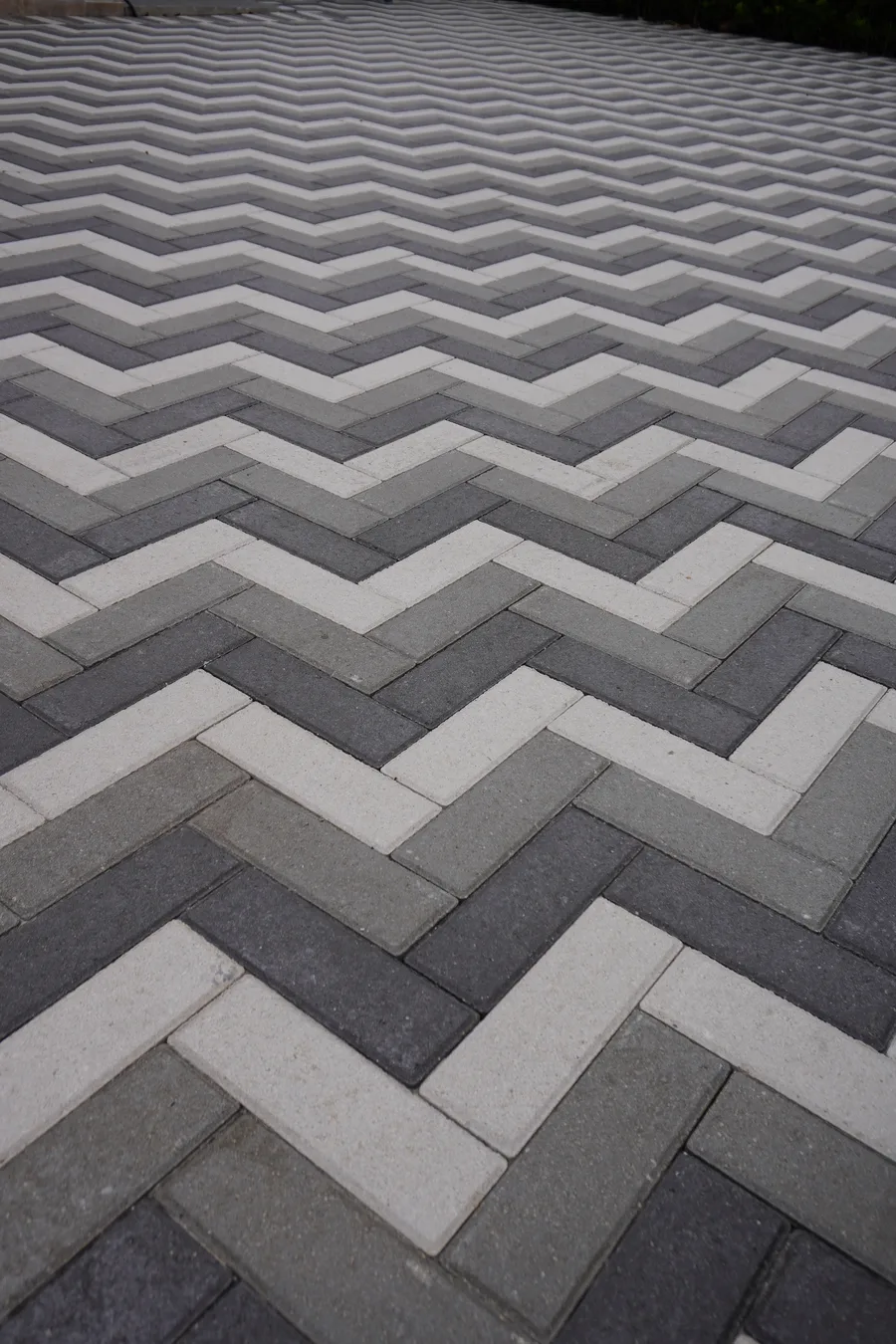
If you're redoing a driveway, patio or pool deck in South Florida, the real decision usually comes down to pavers vs. poured concrete. Both work here — but they age very differently under our sun, rain and shifting soil. Here's an honest side-by-side so you can pick the one you won't regret.
We install both every week across Kendall, Hollywood and the rest of South Florida, so we don't have a dog in the fight — the right answer depends on your budget, your look and how long you plan to stay in the home. Let's break it down.
The quick verdict
Concrete costs less up front and goes in fast. Pavers cost more to install but look better, last longer, and are far easier to repair when our ground moves or a root lifts a section. If you want the cheapest surface today, concrete wins. If you want the best long-term value and curb appeal, pavers usually win.
Cost
Poured concrete is almost always cheaper to install than pavers because it's less labor and material. Pavers cost more per square foot because each unit is set by hand over a compacted, screeded base. The gap narrows over the years, though: when concrete cracks — and in our soil it eventually does — the fix is patching or replacing a whole slab. When a paver settles, you lift a few, re-level the base and re-lay the same pavers. No color mismatch, no demolition.
Looks & curb appeal
This is where pavers pull ahead. You get dozens of colors, shapes and patterns, crisp borders, and a high-end custom look that lifts the whole front of the house. Stamped concrete can imitate the look, but the pattern is uniform and, once it cracks, the crack cuts straight across the "stones." For resale in South Florida, a paver driveway simply shows better.
Durability in the South Florida climate
Our heat, heavy summer rain and sandy, shifting soil are hard on any hardscape. Concrete is one rigid slab, so ground movement shows up as cracks. Pavers are individual units with sand joints, so they flex with the ground instead of cracking, and they drain better in a downpour. Properly installed pavers routinely last decades and can be re-leveled if the base ever shifts.
Bottom line: concrete is the budget pick, pavers are the long-term value pick. The biggest factor either way is the base underneath — a rushed base is why cheap driveways crack or sink no matter which surface goes on top.
Maintenance
Concrete is low effort but hard to fix invisibly — cracks and stains tend to stay. Pavers need the occasional joint-sand top-up and a seal every few years, but any damaged unit is a five-minute swap. For pets and kids, pavers also stay cooler and offer more grip than a smooth concrete slab.
So which should you choose?
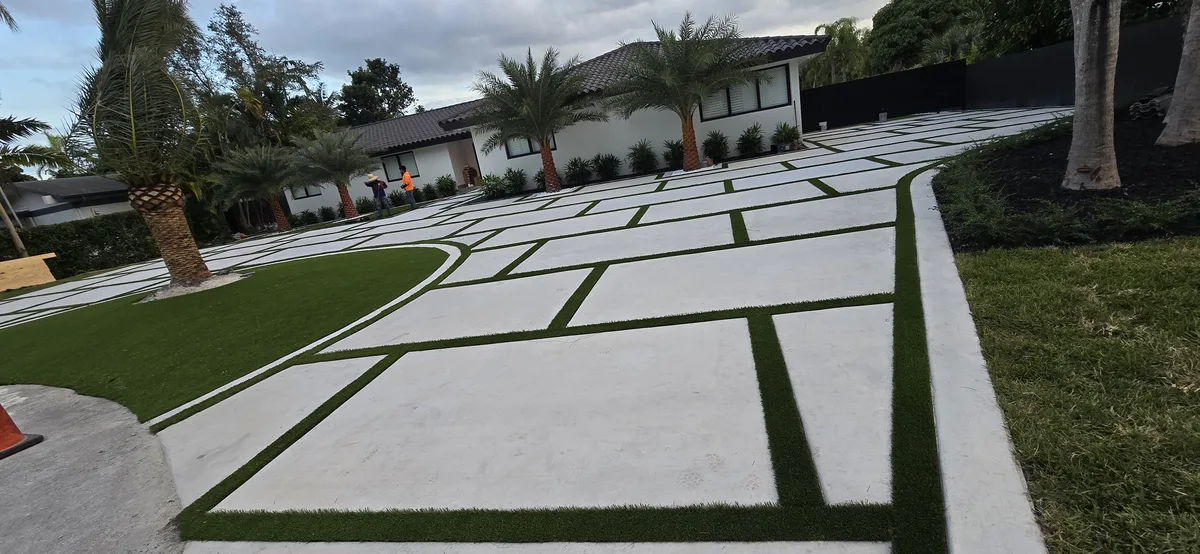
Choose concrete if you want the lowest upfront cost and a simple, uniform surface. Choose pavers if you want the best look, the easiest long-term repairs and stronger resale value. Many of our clients pair paver driveways and patios with artificial turf and outdoor living areas for one cohesive, low-maintenance yard. You can see finished projects on our projects page, and we install throughout Kendall, Hollywood and the rest of our South Florida service area.
Are pavers better than concrete in Florida?
For most South Florida homes, yes. Pavers flex with our shifting, sandy soil instead of cracking like a rigid concrete slab, drain better in heavy rain, look higher-end, and can be re-leveled or swapped unit-by-unit. Concrete is cheaper up front but harder to repair invisibly.
Do pavers cost more than concrete?
Yes, pavers cost more to install because each one is hand-set over a compacted base. But repairs are cheaper and cleaner over time, so the long-term cost gap is smaller than it looks on day one.
Which lasts longer, pavers or concrete?
Properly installed pavers typically last longer in South Florida because they move with the ground and can be re-leveled, while concrete slabs eventually crack and are harder to fix seamlessly.
Do pavers get too hot for pets in Florida?
Quality pavers generally stay cooler and offer more grip than a smooth concrete slab, and lighter paver colors reflect more heat. For play areas, many homeowners combine pavers with artificial turf.